
read time: 2 min
Sometimes meetings come together faster than your calendar can handle — an unexpected board meeting, an urgent team offsite, or a client visit that wasn’t on the radar. The clock is ticking, and all eyes are on you to make it happen.
The good news? With the right structure and tools, you can plan even the most last-minute meetings without chaos. It’s about knowing what takes priority, focusing your effort where it counts, and using technology to help you plan confidently under pressure.
How to plan a last-minute meeting
Follow these six tips to plan a last-minute meeting calmly and effectively.
1. Start with clarity and define the core objective
Before jumping into logistics, pause and define why the meeting is happening and what success looks like. Start by clarifying the objective: is this meeting about decisions, strategy, or connection? From there, identify who truly needs to be in the room and define the outcomes that will make the meeting a success. Align with your executive and meeting stakeholders to better understand these details.
Clarity early on helps you stay grounded and makes it easier to prioritize what’s essential, so you can move planning forward with purpose.

2. Prioritize the essentials
When time is limited, focus on what makes the meeting possible, not what makes it perfect. Start by locking in the core details: date, destination, and venue. These are the pillars that every other decision depends on.
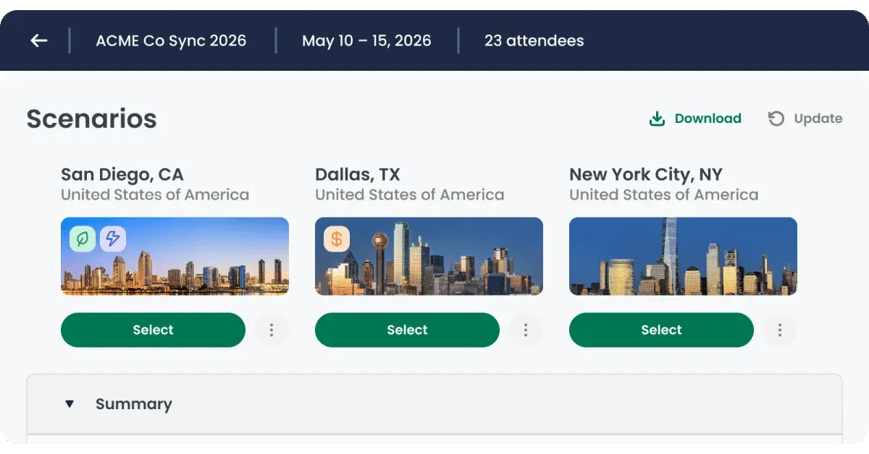
Use TROOP Planner, a meeting planning and travel logistics platform, to compare destination options instantly — so you can move quickly without sacrificing costs or attendee experiences. Once those key details are set, align attendee logistics for smoother coordination, including travel preferences, accommodation, and transfers.
Pro Tip: If your executive’s schedule is tight, place holds to capture attendee invites and RSVPs immediately while final details are confirmed. It protects valuable time for you and your executive, and prevents unnecessary rework later.
3. Communicate quickly, but clearly
When plans shift quickly, communication is key. Clear, concise updates help everyone stay aligned and prevent confusion — giving your executive confidence that the meeting is under control.
Share a meeting brief that includes everything attendees need to know: travel details, meeting times, contacts, and any key information and reminders. Keep updates in one place so everyone has the same information, avoiding last-minute questions or crossed wires. Consistent communication sets the tone for a well-run meeting. It reassures your team and attendees that every detail has been thoughtfully managed.
Get aligned before you start planning

4. Lean on data-driven solutions and technology
When every minute counts, technology plays a big role. Data-centered tools help you make faster, more informed decisions — eliminating the guesswork that slows planning down.
Instead of searching across multiple systems, use platforms that surface real-time data on flights, hotels, and meeting spaces, all in one place so you can compare costs, travel times, and availability quickly. That insight helps you balance budgets and logistics without sacrificing attendee experience.
With TROOP, you can plan smarter and faster in one platform: evaluating destinations, tracking budgets, and managing logistics while keeping stakeholders aligned. TROOP makes it easy to plan every detail so you can make faster, better-informed decisions without manual work or scattered spreadsheets.
5. Anticipate challenges and plan around them
Even last-minute meetings can run smoothly with a little strategic thinking. Expect limited flight options, higher rates, and tight venue availability — and plan backups early. Look at where attendees are traveling from and how flight schedules or time zones could impact arrival and departure times.
If early flights aren’t available or the meeting starts first thing in the morning, build in an arrival night before or adjust the agenda to allow for travel flexibility. Consider splitting attendees into two nearby hotels if availability is tight at one space. Small adjustments like this protect the attendee experience and limit surprises.
When exploring restaurant or catering options, remember that there may not be availability for large groups at the last-minute. This is when asking your fellow EA community comes in handy. Other meeting planners who are familiar with the location can easily recommend the best restaurants, hotels, vendors, and more that are available on short notice.
Staying calm and prepared through the inevitable rush of last-minute planning shows foresight, composure, and reliability. Those are the traits your executive and attendees remember long after the meeting ends.
6. Reflect and capture learnings post-meeting
Take a moment to review what worked and what you’d adjust next time, that’s a given with any meeting you plan. But when it comes to last-minute meetings, take a more granular look at what vendors were available on short notice and if they did a good job. Was the hotel accommodating? Did you find a restaurant or catering service for your large group? What costs were really impacted by the limited planning window? These reflections turn reactive planning into strategic growth, reinforcing your ability to lead no matter the circumstances.
Understanding last-minute meeting planning
Planning a meeting on short notice doesn’t have to mean scrambling through the details. With structure, clarity, and the right tools, you can turn time pressure situations into focused ones. Each meeting you deliver under tight timelines reinforces your adaptability, credibility, and calm leadership — proving that success comes from how you plan, not how much time you have.
Plan more efficient and engaging in-person meetings