
read time: 6 min
Meeting planning is more complex than it was just a few years ago. Teams are more distributed, budgets are tighter, and plans are scrutinized earlier. None of these changes happened overnight, but together they’ve reshaped what it takes to plan an in-person meeting successfully.
The people who plan in-person meetings have also shifted. Executive Assistants (EAs), department leaders, Chiefs of Staff, and Human Resource teams now carry much of the responsibility — often alongside many other priorities. For EAs in particular, this means managing more complexity, more scrutiny, and more expectations around how meetings are planned and executed.
The trends emerging in 2026 reflect this new reality. Understanding them helps EAs and meeting planners anticipate friction before it shows up, make stronger recommendations, and plan meetings with greater confidence.
7 meeting planning trends in 2026
Below we highlight what’s changing in 2026 — and how meeting planners can stay ahead.

1. Distributed teams make travel more complex
Teams are more distributed than ever — hybrid, multi-office, and fully remote — with attendees traveling from different regions, time zones, and countries. That distribution directly impacts feasibility, cost, timing, and coordination.
A leadership offsite scheduled to start at 9am may look efficient on paper. But when half the group is flying cross-country or internationally, that decision affects arrival patterns, hotel nights, ground transportation, and overall budget. It can also increase the risk of delays, missed connections, and last-minute adjustments.
Treat attendee information as living data. Build schedules and recommendations around how people actually travel so that meetings are feasible, cost-conscious, and realistic.
TROOP tip: TROOP makes it easy to model arrival and departure buffers, evaluate travel feasibility, and see how distributed teams impact total travel time and cost before plans are finalized.
2. Sustainability is a consideration
Budgets still drive most decisions, but environmental impact is increasingly part of the conversation when selecting destinations, travel routes, and venues.
In practice, this shows up in small but meaningful ways: selecting centrally located cities to reduce travel time, limiting unnecessary connections, opting for train or car travel where it makes sense, encouraging ridesharing based on arrival or departure times, or offering a hybrid option when in-person attendance doesn’t add value. These options can support sustainability goals while still aligning with budget and attendee experience.
TROOP tip: With TROOP, you can compare destinations and travel routes, making it easier to weigh cost, travel, and sustainability together — and show why a particular option makes the most sense.
3. Tighter budgets require earlier justification
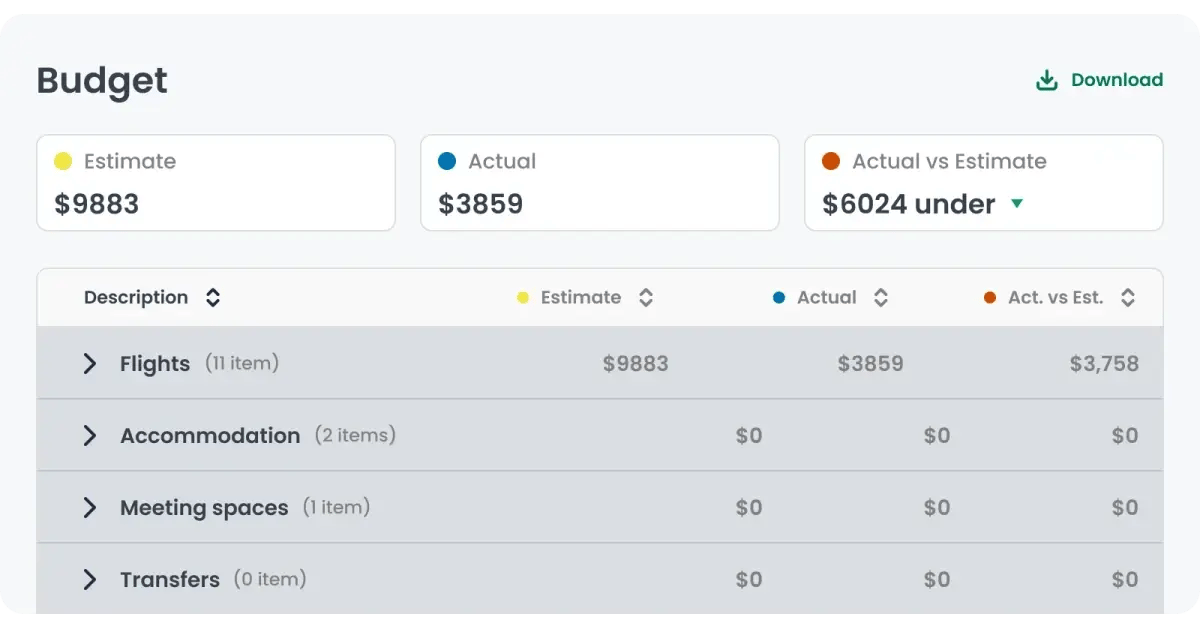
Budgets aren’t just tighter — they’re reviewed earlier, compared more closely, and questioned more often. Leaders want to understand not only what a meeting will cost, but how that number was built and what variables could change it.
That means making the logic behind your estimates visible. Instead of presenting a single static number, outline what your budget is based on: projected headcount, travel costs, room nights, meals, and buffers. Clarify which elements are fixed and which may shift as plans evolve.
Headcount changes, travel adjustments, and timing shifts can quickly impact total spend. When those drivers are visible from the start, updates feel like informed adjustments rather than surprises. A per-attendee view helps costs scale realistically as the group changes, and offering ranges early creates flexibility while details are still coming together.
When the rationale behind a budget is clear, approvals are gained faster. Conversations focus on tradeoffs rather than corrections, and finance teams gain confidence that numbers reflect reality rather than best guesses.
TROOP tip: TROOP helps you build and compare meeting budgets using real travel and accommodation data, so your estimates are grounded from the start and easy to revisit as information changes.
4. Major global events impact availability and pricing
Large-scale events increasingly influence when and where in-person meetings can realistically take place. Major conferences, sporting events, festivals, and industry gatherings can drive hotel rates higher and tighten availability across entire cities, often before planners realize what is happening. What looks like a practical destination one week can quickly become limited or cost-prohibitive the next.
These impacts are rarely isolated to one venue. When demand spikes, it affects room blocks, meeting spaces, ground transportation, and even flight pricing. By the time rates begin to climb, flexibility is already shrinking.
Staying ahead requires awareness and optionality. Research what else is happening in a destination before finalizing dates, and consider whether shifting by even a week could materially change cost or availability. Building backup cities or alternative date ranges into early conversations makes adjustments easier if conditions shift.
TROOP tip: Compare multiple destinations or date ranges early in the planning process. Having vetted alternatives makes it easier to pivot without starting from scratch if availability tightens or pricing spikes.
5. Shorter timelines leave less room for error
Planning windows are becoming more compressed. What once had months of lead time is now often planned in weeks or requires last-minute changes.
With less time to adjust, initial recommendations carry more weight. Changes to travel, venues, or agendas ripple quickly, and there’s limited room to course-correct once planning is in motion.
When you know what needs to happen and when, you can move faster and avoid last-minute fixes.
TROOP tip: When timelines are tight, decide what needs to be locked in first — typically dates, location, and attendees — before moving to secondary specifics. Getting the essentials locked in first, reduces the risk of rework later.

6. Expectations continue to rise
Expectations around in-person meetings are higher across the board. Leaders still expect meetings to feel polished, intentional, and worth the time investment — even as timelines shrink and budgets face closer review.
That means details matter more than ever: travel that makes sense, budgets that hold up under scrutiny, agendas that flow, and communication that keeps everyone aligned. When planning moves quickly, small missteps stand out — making structure and clarity even more critical.
At the same time, attendee expectations are rising too. When people are stepping away from their usual routines, traveling across time zones, or giving up personal time, they expect the meeting to feel purposeful and well-run. A smooth experience contributes not just to engagement in the room, but to morale, culture, and how people feel about coming together in person.
A consistent planning approach and direct communication help meet both sides of that equation — reinforcing confidence with leadership while ensuring attendees feel supported and that their time was well spent.
TROOP tip: When expectations are high on both sides, pressure-test the meeting from two perspectives — leadership and attendee. Ask yourself: Is the objective clear? Is the travel reasonable? Does the agenda respect people’s time? Small, well-timed adjustments often prevent bigger issues later.
7. Data-backed decisions are no longer optional
Meeting plans are often questioned — not because they’re wrong, but because leaders want to understand the tradeoffs behind them. Gut checks and static spreadsheets don’t hold up when timelines shift, headcount changes, or costs change mid-plan.
Having access to up-to-date data makes those conversations easier. You can compare options, explain the impact of different scenarios, and adjust as details evolve without reopening decisions or retracing your steps.
TROOP tip: TROOP brings all of this data together in one place — surfacing flight options, travel time, cost implications, and attendee impact side by side. Instead of piecing together answers after the fact, you can recommend options confidently and show the reasoning behind every choice.
Keep an eye on meeting planning trends this year
Understanding these trends helps you make better calls earlier, respond calmly when conditions change, and design meetings that work for both leadership and attendees. In 2026, thoughtful planning isn’t about perfection — it’s about being prepared for what’s ahead.
Spot planning pitfalls early and keep them from taking over your meetings.