read time: 3 min
An executive asks for a last-minute update before stepping into a board meeting. A department head wants clarity on budget changes. A vendor is waiting for confirmation.
In moments like these, how you communicate determines what happens next.
For Executive Assistants (EAs), strong communication means filtering information, clarifying priorities, and delivering direction in a way others can immediately act on. Because EAs operate close to leadership decisions, cross-functional conversations, and high-stakes timelines, your words directly shape how work moves forward.

Top communication skills for Executive Assistants
These communication skills help Executive Assistants clarify priorities, support leadership decisions, and keep cross-functional work aligned.
1. Be an active listener
Listening means understanding the business intent behind a request, not just the task being assigned. When an executive says, “Let’s make this a working session,” the real question becomes: What decision needs to be made, and who needs to be in the room to make it? Active listeners focus on the outcome first, then shape the details around that outcome instead of defaulting to logistics.
How to strengthen this skill:
- Listen for the result the request is meant to achieve.
- Track recurring themes, as repetition often signals underlying friction, and address patterns before they escalate.
- Confirm objectives early so scope, timing, and stakeholders are aligned from the start.
Why it matters: When you understand the intent, you reduce unnecessary coordination and can make more confident decisions.
2. Speak in stakeholders’ language
Not everyone evaluates information the same way. Finance may focus on cost breakdowns and overages. An executive may care more about timing and business impact. Vendors need clarity on scope and deadlines.
You don’t need a different message for each stakeholder — you need the right framing so they can act without hesitation. For example, saying “The budget increased” raises questions. Saying “Headcount increased by three attendees, which raised per-person travel and catering costs by 8%” answers them before they’re asked. The difference is the context you provide.
This skill is especially critical for EAs, who frequently communicate on behalf of leadership. Your tone, structure, and emphasis shape how direction is interpreted across the organization.
How to strengthen this skill:
- Learn each stakeholder’s preferred style and communication channel.
- Mirror your executive’s tone when drafting messages on their behalf, and use AI thoughtfully to confirm it reflects their style.
- Translate technical information into impact and outcomes.
Why it matters: EAs sit at the intersection of leadership and the rest of the organization. How you frame information directly influences how decisions are interpreted and whether work moves forward or stalls.
3. Leverage technology
Communication doesn’t only happen in conversations. It also happens in the systems people rely on. When information is scattered across chat threads, spreadsheets, and inboxes, context gets lost and conflicting updates multiply.
Strong communicators build structure so everyone sees the same version.
How to strengthen this skill:
- Establish one source of truth so stakeholders aren’t operating from different versions.
- Document changes and approvals visibly instead of relying on verbal confirmation.
- Standardize how updates are shared so teams know where to look and what to expect.
- Use tools that make timelines, updates, and changes easy to see at a glance.
Why it matters: When information is centralized and consistently updated, everyone operates from the same version of reality and you spend less time chasing confirmations.
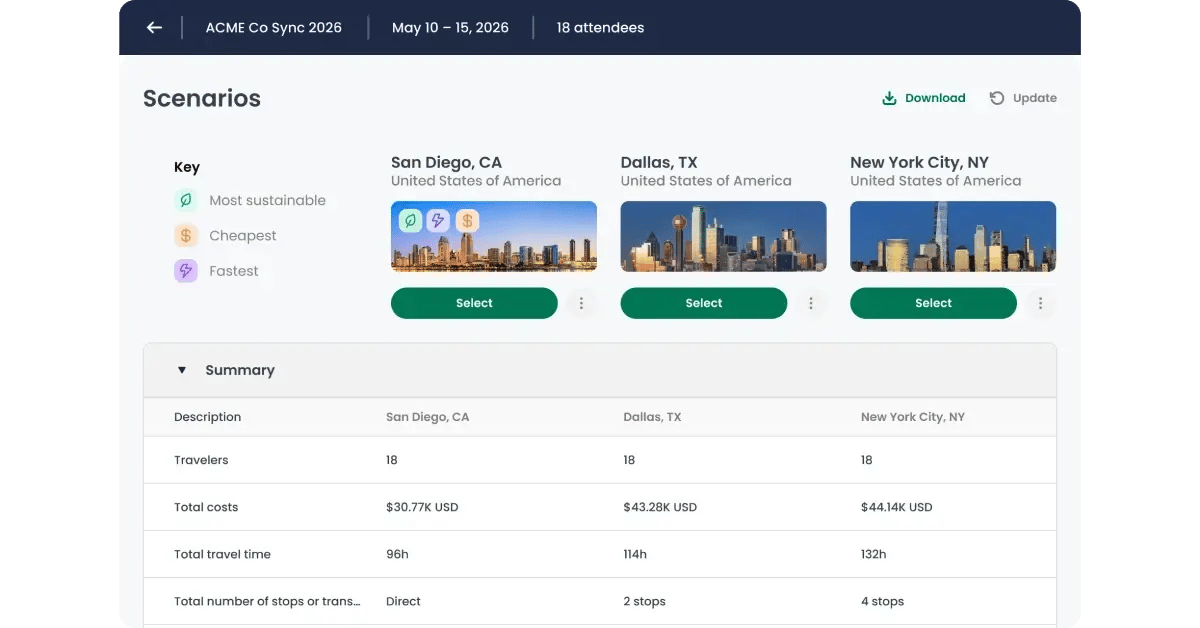
Tools like TROOP help you compare travel options, visualize costs, and keep meeting details visible — reducing the need to chase down answers later.

4. Ask the right questions
Clarity doesn’t happen by accident. Even when intent is clear, execution can stall if details are assumed instead of confirmed. Whether you’re reviewing planning KPIs, confirming a budget adjustment, or translating executive direction, targeted questions surface gaps before they turn into delays.
How to strengthen this skill:
- Ask “What does success look like?” when objectives feel broad or undefined.
- Clarify decision ownership: “Who is responsible for final approval?”
- Confirm constraints around timing, budget, or scope before committing resources.
- Follow up to confirm shared understanding and to keep work moving.
Why it matters: Asking the right questions prevents rework and makes execution more predictable.
5. Use data to drive clarity
Data doesn’t speak for itself. Strong communicators don’t just report numbers — they explain what the numbers mean and what happens next. For example, “Only 40% of the team opened the internal update. It may help to share a shorter summary in Slack so the key decisions are seen.”
When you connect data to context, others can evaluate it more confidently.
How to strengthen this skill:
- Explain what changed and why, not just that something changed.
- Frame tradeoffs clearly, such as what improved and what stayed constant.
- Offer a recommendation when appropriate instead of stopping at the analysis.
- Use AI tools to identify trends or surface metrics you might otherwise overlook.
Why it matters: Being able to explain the “so what” behind the data strengthens your credibility and influence.

6. Navigate conflict with clarity and confidence
Conflict often signals competing priorities. Your role is not to eliminate tension, but to clarify tradeoffs and keep work moving.
How to strengthen this skill:
- Address issues early and factually.
- When priorities conflict, restate the shared objective, propose next steps, and document decisions to prevent future friction.
- Acknowledge emotion without escalating it, then bring the conversation back to the outcome.
- Communicate boundaries clearly and respectfully.
Why it matters: In difficult moments, steady communication builds credibility, even when perspectives differ.
Understanding EA communication skills
When Executive Assistants refine how they communicate, they strengthen the influence they already carry. It shows up in how priorities are interpreted, how stakeholders stay connected, and how work moves forward with confidence.
Communicate effectively with TROOP to streamline meetings management.