read time: 4 min
Oftentimes meeting planners default to a major city when choosing the meeting destination. They’re the easiest option logistically — more flights, more hotels, more familiarity — even if it means stretching the budget or scaling back elsewhere to make it work.
But there are off the beaten path options worth considering before automatically making the easy decision. Depending on your goals, you might be looking for a lower-cost alternative to cities like New York or London, a setting that feels more removed for a true offsite, or simply a new destination to avoid location fatigue. The city you choose shapes everything from cost to attendee experience.
.webp?width=869&height=455&name=Executive%20Assistants%20with%20suitcases%20outside%20walking%20to%20a%20meeting%20venue%20in%20an%20off%20the%20beaten%20path%20city%20(1).webp)
Off the beaten path doesn’t mean difficult to reach. It includes smaller cities, secondary hubs, or destinations just outside major metros that still offer strong infrastructure.
Top off the beaten path meeting locations
Here are eight cities to consider for your next meeting — each combining accessibility, affordability, and walkability to make planning easier and the overall experience more engaging.
1. Ann Arbor, Michigan
A growing tech and startup hub, Ann Arbor is becoming a smart choice for in-person meetings. Home to the University of Michigan, the city offers a business-friendly environment with a compact, walkable downtown and a lively college-town atmosphere, filled with independent restaurants, coffee shops, and more.
Planning tips
- Detroit Metropolitan Airport is about a 25–30 minute drive. Rideshares are reliable, but for groups, pre-arranged shuttles help streamline arrivals and reduce cost.
- Base your meeting in one of the main districts (Main Street, Kerrytown, South University, or State Street) to keep sessions close together, while taking advantage of hotels and venues with built-in sustainability practices.
- University events — especially football weekends — can drive up hotel rates and limit availability.
- With fewer students in town, June through September typically means better availability and a good window for outdoor activities. Winter can still work, but build in extra time in case weather impacts travel.
2. Bend, Oregon
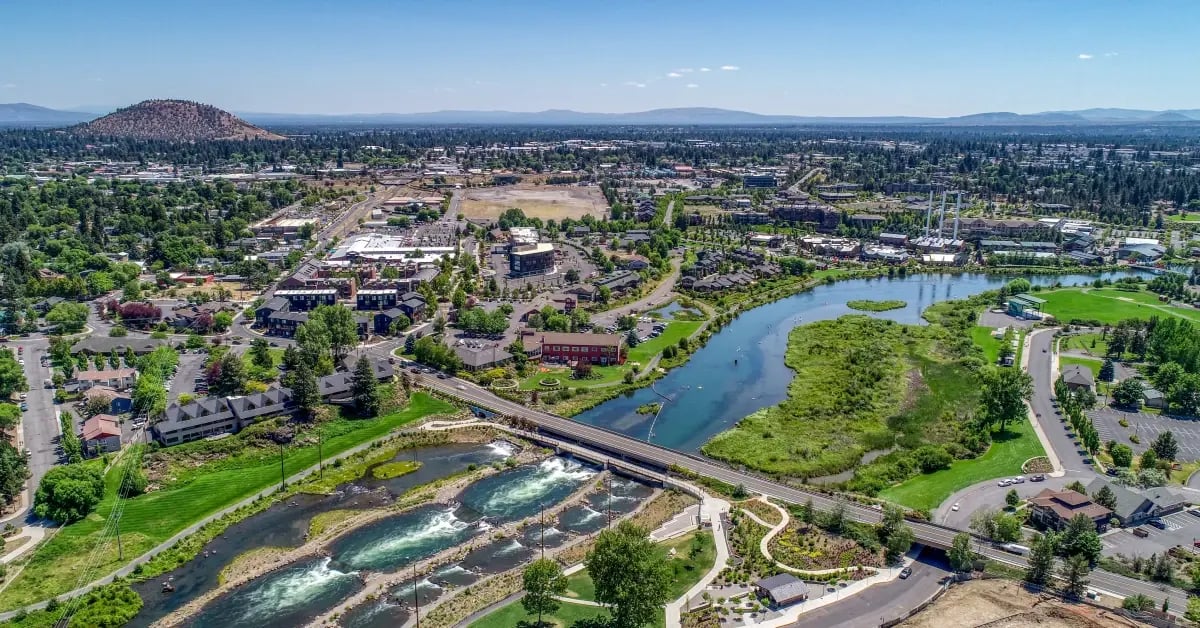
Versatile venues, plenty of sunshine throughout the year, and a growing tech scene make Bend a strong West Coast option for business gatherings. The downtown is compact and walkable, with a good mix of restaurants and accommodations.
Planning tips
- Redmond Municipal Airport is about a 20–30 minute drive from Bend. Flight options are more limited than major hubs, plan arrivals early and consider coordinating group transfers.
- Bend is less centralized than a typical downtown meeting city, expect some drive time between venues. Rideshares are available, but organizing group transport can help keep schedules on track. For more sustainable options, consider Cascade East Transit, biking, or shared shuttles.
- Build in time for outdoor activities like hiking, rafting, or golf, and consider group experiences like brewery tours or a visit to Juniper Preserve for a more local feel.
- Even in summer, evenings can be cool, recommend layers to your attendees. In winter, snow and colder temperatures can impact travel and outdoor plans, build in flexibility and backup options just in case.
3. Durham, North Carolina
Durham is easy to get to, with Raleigh-Durham International Airport just 20 minutes away. Home to Duke University and close to Research Triangle Park, the city blends academic and business energy. Downtown is compact and walkable, so it’s easy for attendees to move between hotels, meeting spaces, and restaurants.
Planning tips
- Plan around peak congestion times across Durham and the broader Triangle area, especially for airport transfers.
- In addition to standard meeting spaces, consider unique options like the American Tobacco Campus for a more memorable setting.
- With a mix of restaurants, food halls, and food truck parks, it’s easy to plan both structured dinners and more casual, drop-in options.
- Summers are hot and humid, lean toward indoor sessions or lighter agendas; winters are shorter but can still be cold, and rain is possible year-round so be prepared for travel delays.
4. Kansas City, Missouri
Kansas City is a centrally located option that’s easy to reach from both coasts, with direct flights through Kansas City International Airport. It offers a wide range of venues and hotels, often at a better value than larger cities.
Planning tips
- The city is more spread out than it looks, organize transfers between venues to avoid delays.
- Kansas City has a strong pro sports presence, which can be great for team outings. Be mindful of game days and major events, as they can impact hotel availability, pricing, and traffic.
- Kansas City experiences all four seasons. Summers are hot and humid, lean toward indoor options or have backups in place. Winters can be cold and windy, which may impact flights and local travel.
- Balance meeting sessions with team activities that reflect the city’s culture, like group BBQ dinners.
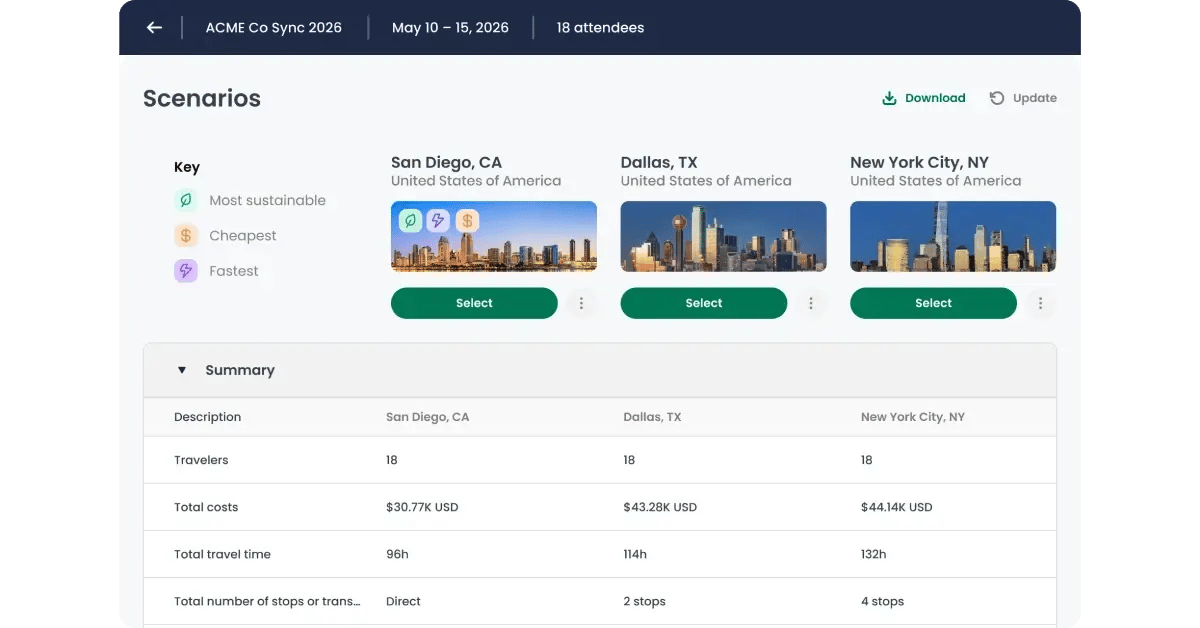
Discover 8 practical ways to reduce in-person meeting costs without cutting impact.

5. Bilbao, Spain
If you’re looking to avoid the cost and crowds of Barcelona or Madrid, Bilbao is a great alternative. The city combines a strong cultural identity — from the Guggenheim to its food scene — with a compact, walkable layout that makes it easy to navigate between meetings, meals, and activities.
Planning tips
- Rain is common throughout the year, especially in winter when it can feel damp and cold. Spring and autumn are more comfortable and often have more availability.
- Secure accommodations and meeting spaces at least 2–3 months in advance to get better rates and more choice.
- Look at Ensanche or areas near the Guggenheim to keep venues, hotels, and restaurants within walking distance.
- The metro and tram systems are efficient and often easier than driving, especially for groups.
- Pinchos (Pintxos) culture makes it easy to plan informal team dinners, with groups moving between spots without needing reservations.
6. Bordeaux, France
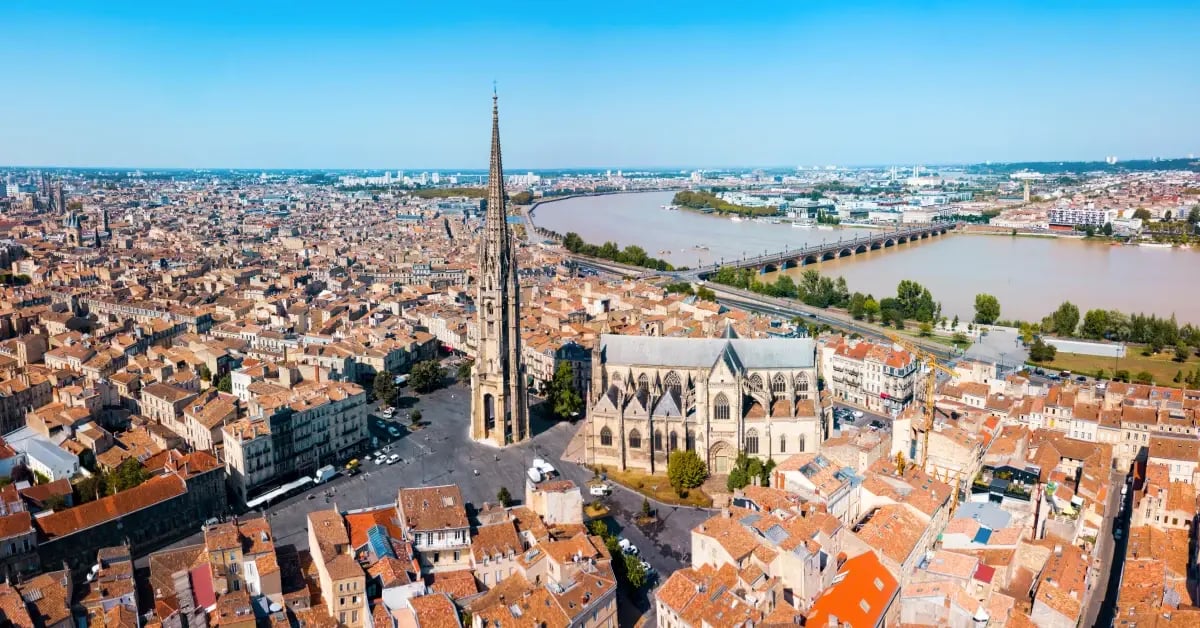
Bordeaux is an easy-to-reach option for international meetings, just two hours from Paris by high-speed train, with direct connections through Bordeaux-Mérignac Airport. It offers a more relaxed alternative to larger French cities, with a compact, walkable center, strong sustainability, and a mix of historic architecture and modern venues.
Planning tips
- The city center is easy to navigate on foot, and the tram system is reliable for getting across the city.
- Wineries and top restaurants often require advance reservations, especially during peak seasons; walk-ins are rarely accommodated.
- Skip planning around “En Primeur” week in April, when many châteaux are closed to general visitors. Late summer and early fall (harvest season) can also impact availability and pricing.
- Terrace seating is typically split between full-service dining and drinks-only sections, so plan accordingly for group meals.
7. Cardiff, Wales
Cardiff is a growing hub for fintech, life sciences, and creative industries, and is an easy option for both UK-based teams and nearby European cities. Many international attendees fly into London or Briston, then take a direct train or short transfer to Cardiff. The city center is compact and flat, making it easy for attendees to walk between hotels, venues, and attractions.
Planning tips
- The city center is easy to navigate on foot, so keep hotels and venues close together. If you’re using Cardiff Bay or heading out to the Vale of Glamorgan, plan taxis or group transport in advance.
- Pair central venues in the Castle Quarter or Cardiff Bay with nearby activities like hiking or water sports to add variety to your agenda.
- Aim for April to June or September to October for milder weather, fewer crowds, and more availability.
8. Porto, Portugal
Porto is an accessible and cost-effective option for international meetings, with a modern infrastructure and strong connectivity. Porto Airport is about 20 minutes from the city center, and the city is well connected by road and rail. Known for its historic character and riverside setting, Porto offers a mix of traditional venues and modern meeting spaces within a relatively compact footprint.
Planning tips
- Stay in central areas to keep restaurants, hotels, and meeting spaces close together.
- Many spaces blend historic architecture with modern amenities, so confirm they support your tech and meeting setup needs.
- Porto’s steep, narrow streets can slow groups down, be sure to arrange transport for offsite activities or add in buffer times.
- Wine tastings or Douro Valley visits are popular options for team activities, but plan transport in advance if heading outside the city.
- March to May or October to November offer good weather with fewer crowds and better pricing.
Choosing the right destination for your meeting
The destination you choose can shape the entire meeting experience. While larger cities are often the go-to, smaller or less obvious locations can offer better value, simpler logistics, and a more focused environment for your team.
As you plan your next gathering, consider destinations that support both your objectives and your attendees — without adding unnecessary complexity.
Compare locations based on cost, convenience, and sustainability for your next meeting.